Crude oil · Bonny Light (Nigeria)
Bonny Light crude oil (BLCO): the real grade, and how to check a seller's allocation
- Bonny Light: grade, loading and pricing basis
- Documents checked before the Deal Room
- Contacts stay masked until the match
This grade
What Bonny Light is and how it reaches a tanker
Bonny Light is a light, sweet blend of crude from onshore, swamp and shallow-water fields in the eastern Niger Delta. It takes its name from the export terminal on Bonny Island in Rivers State, where the blend is stored and loaded. It is also Nigeria's grade in the OPEC Reference Basket, which is one reason the name is so widely known, and so widely borrowed.
The numbers buyers look at first come from published assays. TotalEnergies' public assay library carries a Bonny Light assay dated 18 June 2020 that reads 34.9° API and 0.15% sulphur by weight, with a total acid number of 0.26 mg KOH/g, a pour point of −18 °C, and nickel and vanadium of 3.6 and 0.5 mg/kg. Roughly half the barrel by weight (50.1%) boils in the 175–400 °C gasoil range, and only 7.4% is residue above 550 °C. That is why refiners like it: a lot of diesel and jet from simple equipment, with very little sulphur to remove. Treat these as typical values for the grade, not a promise about any one cargo; the certificate of quality for the actual lifting governs. Our guide to reading a crude oil assay explains each line.
The terminal side changed hands recently. For decades Shell's Nigerian subsidiary SPDC operated the joint venture that runs the Bonny terminal. In March 2025 Shell completed the sale of SPDC to Renaissance Africa Energy Company, a consortium of mostly Nigerian independents, which now operates the venture for its partners: NNPC with 55%, Renaissance 30%, TotalEnergies 10% and Agip (Eni) 5%. Crude reaches Bonny by pipeline, mainly the Trans Niger Pipeline. When that line was ruptured by a blast on 17 March 2025, crude movements to the terminal stopped until flows were rerouted. Pipeline outages and force majeure notices have interrupted Bonny Light exports more than once over the years, so a seller's story should fit what was happening at the terminal that month.
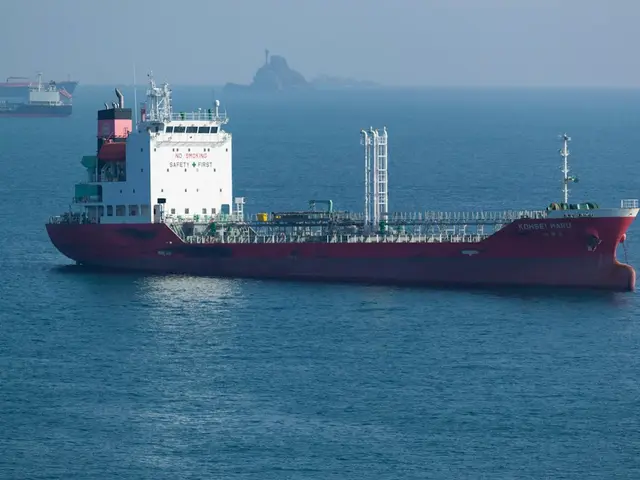
Loading follows a monthly export programme. Cargoes are scheduled by date range and lifted by companies that hold the barrels: the joint-venture partners for their equity share, and NNPC's term-contract buyers for NNPC's share. The standard cargo is 950,000 barrels, a Suezmax load. Platts' specification for its Bonny Light assessment uses 950,000 to 1,000,000 barrels. NNPC has said publicly that its term contracts typically run at 30,000 to 32,000 barrels a day, which adds up to one standard cargo a month, not the two or three million barrels a month that brokers advertise.
- Published assay (TotalEnergies, 18 June 2020): 34.9° API, 0.15 wt% sulphur, TAN 0.26 mg KOH/g, pour point −18 °C, density 850 kg/m³.
- Other Nigerian grades in the same public library: Brass River 36.6° API / 0.13% S (2018 assay), Forcados 31.5° API / 0.22% S (2014 assay). Qua Iboe, loaded at its own terminal, is 37.3° API / 0.12% S in ExxonMobil's published list.
- Standard cargo: 950,000 barrels FOB the Bonny terminal, loading from a monthly programme.
- Terminal operator since March 2025: Renaissance Africa Energy Company, for the NNPC / Renaissance / TotalEnergies / Agip joint venture.
This grade
How Bonny Light is priced (named, not quoted)
Bonny Light is priced against Dated Brent, the North Sea benchmark, plus or minus a differential. Platts assesses it two ways: as an outright price FOB Bonny Terminal, and as a differential to a 30–60 day forward Dated Brent strip, for cargoes loading 25 to 55 days ahead. All of Platts' West African crude assessments use its market-on-close process at 16:30 London time. Argus publishes its own Nigerian assessments. Our Platts and Argus guide explains how those prints work and how to name one in a contract.
NNPC sets its own number too. Each month it publishes an official selling price (OSP) for every Nigerian grade, expressed as a premium or discount to Dated Brent, and its term buyers pay Dated Brent around the bill of lading date plus that differential. Equity lifters and traders reselling a cargo negotiate their own differentials against the same benchmark. So a genuine Bonny Light offer reads like "Dated Brent plus or minus X, FOB Bonny, for a named loading window", not like a flat price per barrel with no date.
This is where many fake offers give themselves away. A deep fixed discount to Brent "because of the allocation", or a price per barrel with no benchmark and no laycan, does not match how the grade is sold by anyone in the chain. Nor does a single offer sheet that quotes Bonny Light next to ESPO, Basrah and Brent in identical terms. TradeNexusMarket does not publish prices or differentials; use your own licensed price data, and see the crude oil page for how crude deals are usually structured.
This grade
How Nigerian crude is really sold, and what a genuine seller can show
NNPC's crude marketing team has repeated the same message for years. It sells its share of Nigerian crude to companies picked through advertised bid rounds, usually on annual term contracts, and it does not add buyers during the term. It has said plainly that it has no intermediaries or agents for crude allocation, that almost every "allocation" document sent to it for confirmation was not genuine, and that it does not sell crude from hotel rooms. A former head of that division put it this way: nobody allocates crude oil on a piece of paper, the process is electronic, and if you have a cargo the whole world knows. If you are told otherwise, NNPC's advice is to check with its crude oil marketing division directly, using contact details from NNPC's official website, never the ones on the offer.
Export paperwork is the second check, and it got stricter in 2025. Under the Petroleum Industry Act 2021, upstream regulation passed to the Nigerian Upstream Petroleum Regulatory Commission (NUPRC). Its guidelines of 17 June 2025 say no crude export may load without an export permit issued through NUPRC's COTEX system, a vessel clearance requested through its Advance Cargo Declaration portal, and a Unique Identification Number generated after clearance. That UIN is printed on the certificate of quantity and quality and carried on the shipping documents, and false declarations can be fined. COTEX also has a public page where a permit number can be checked. A real lifter applies for these itself; they are not something a broker sells.
So the questions for a Bonny Light seller are concrete. Who is the lifter of record, and what is your written link to them? Which loading month and date range, from which programme? Once loaded, where are the bill of lading, the certificate of quantity and quality with its UIN, and the certificate of origin? Which inspection company measures the cargo at Bonny, and will it confirm the report to you directly? The usual order of documents is in our deal-process guide, how to confirm an inspector's report is in our SGS and Intertek guide, and what a mandate letter must and cannot prove is in our seller mandate guide.
Who buys the grade also helps you test a story. EIA figures for all Nigerian crude, not Bonny Light alone, show exports of about 1.3 million barrels a day in 2024, with Europe the largest destination (Spain and France leading) and India and Indonesia the largest in Asia. At home, the 650,000 b/d Dangote refinery near Lagos started commercial operation in 2024. Real buyers are refiners and large trading houses with credit lines and their own vetting rules for the ship. Nigeria itself is not under sanctions, but you should still screen every company and the vessel against the OFAC, EU and UK lists, and take your own legal and compliance advice; this page is not that advice. Before two companies meet on TradeNexusMarket, our team checks the papers described in the Deal Room rules. You can see what members have posted on the public board, or open a free account to post a requirement.
- Lifter of record named: an NNPC term-contract holder or a joint-venture partner lifting its equity share, with a written chain from them to the seller.
- Loading month and date range from the Bonny export programme; cargo around 950,000 barrels.
- NUPRC export permit (COTEX) and, after loading, the UIN on the certificate of quantity and quality and shipping papers.
- Bill of lading, certificate of origin and an inspector's report you have confirmed with the issuing office.
- Price written as a differential to Dated Brent with a named assessment and pricing window.
Bonny Light-specific red flags
- An "NNPC allocation letter" or "crude allocation" offered to you for a fee or commission. NNPC says it does not allocate crude through agents or on paper.
- Contracts of two million barrels a month or more, "12 months rolling", from a single seller. NNPC term contracts are typically 30,000–32,000 barrels a day, about one cargo a month.
- Fees for a "lifting licence", "DPR licence", "export permit" or "allocation registration" paid to the seller. Export permits are applied for by the exporter through NUPRC's COTEX system.
- Meetings to sign in a hotel, or an "NNPC official" using a free email address.
- Bonny Light sold ex-tank in Rotterdam, Houston or Fujairah with a tank storage receipt and no bill of lading or voyage history from Bonny.
- An assay that does not look like the grade: sulphur well above the published 0.15%, API in the 20s, or the same sheet reused for several grades.
- A fixed price per barrel with no Dated Brent reference, no loading window and no named loading terminal.
- Procedures that ask the buyer for proof of funds, an MT103 or a bank letter before the seller shows anything about the cargo.
FAQ
Crude oil at Bonny Light
What are the API gravity and sulphur content of Bonny Light?
TotalEnergies' published assay dated 18 June 2020 gives 34.9° API and 0.15% sulphur by weight, which makes Bonny Light a light, sweet crude. Those are typical values for the grade. The certificate of quality for a specific cargo is what counts in a contract.
Can I buy Bonny Light directly from NNPC?
Only through NNPC's own advertised bid rounds for term contracts, which are usually annual and closed to new buyers once awarded. NNPC says it has no agents or intermediaries for crude allocation. Anyone selling access to an "allocation" is not offering an NNPC process.
How is Bonny Light priced?
As a differential to Dated Brent. NNPC publishes a monthly official selling price for the grade, and Platts and Argus assess spot differentials for cargoes loading weeks ahead FOB Bonny. We name the benchmarks but do not publish prices.
What size is a Bonny Light cargo?
The standard cargo is 950,000 barrels, loaded on a Suezmax tanker from the monthly programme at the Bonny terminal. Platts' assessment covers 950,000 to 1,000,000 barrels.
Can I post a Bonny Light requirement or offer on TradeNexusMarket?
Yes, posting is free. Name the grade, quantity, FOB Bonny or CIF port and the loading month. Sellers need proof of product or a written mandate from the lifter before a Deal Room opens, and our team checks it.
Guides
Read before you trade this grade
- Guide · Crude oilHow to read a crude oil assay for the first time
- Guide · Crude oilLOI, ICPO, SPA, POP: the crude oil deal process in plain English
- Guide · Red flagsThe most common petroleum trading scams, and the paper trail that exposes them
- Guide · Deal paperworkWhat a seller mandate letter should say, and how to check one
- Guide · Pricing referencesPlatts and Argus benchmarks explained: CIF NWE, FOB Singapore and FOB Arab Gulf
- Guide · Deal documentsHow to verify an SGS or Intertek report with the issuer
- Guide · Deal documentsIncoterms 2020 for oil cargoes: FOB, CIF, CFR and DAP explained
- Guide · Payment and trustHow escrow, payment instruments and verification protect energy buyers
Post a Bonny Light requirement or offer
Open a free account and post what you need or what you supply for Bonny Light. Our team looks for the other side and checks both companies before the Deal Room opens. See what members have posted on the public board.