Crude oil · Murban (Abu Dhabi, UAE)
Murban crude oil: Abu Dhabi's light grade, how it is priced now, and how to check a seller
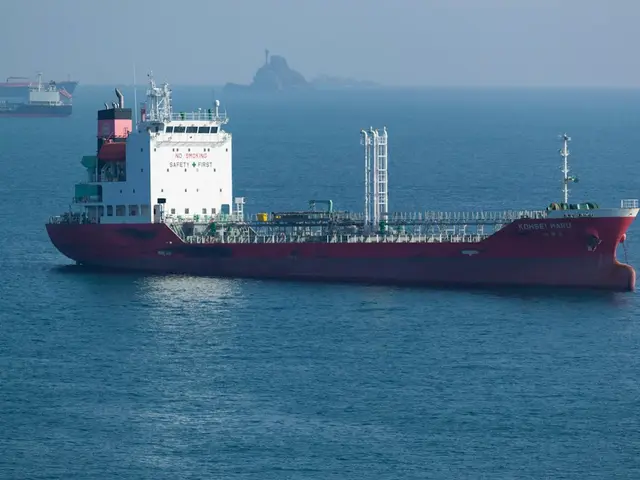
- Murban: grade, loading and pricing basis
- Documents checked before the Deal Room
- Contacts stay masked until the match
This grade
What Murban is and how it reaches a tanker
Murban is a light crude produced onshore in Abu Dhabi by ADNOC Onshore. The name comes from the Murban Bab field, where oil was found in 1958; ADNOC says the first producing well, Murban-3, came on stream in 1960. Today the grade is a blend from several onshore fields, and it makes up roughly half of ADNOC's production capacity. ADNOC owns 60% of the onshore concession, and its international partners hold the rest. A 2021 ICE analysis listed them as BP, TotalEnergies, CNPC, Inpex, Zhenhua and GS Energy. So Murban has more than one genuine seller: ADNOC for its own share, and each partner for the equity barrels it lifts.
The assay numbers are easy to find. TotalEnergies' public assay library carries a Murban assay dated 7 August 2013: 40.5° API and 0.74% sulphur by weight, with a density of 822 kg/m³, a very low acid number of 0.05 mg KOH/g, a pour point of −9 °C, and nickel and vanadium of 1.6 and 2.4 mg/kg. ADNOC's own product page gives 40° API and 0.778% sulphur. More than a quarter of the barrel by weight is naphtha, about 44% boils in the 175–400 °C gasoil range, and under 10% is heavy residue above 550 °C. Treat these as typical published values, not a promise about any one cargo; the certificate of quality for the lifting governs. Our guide to reading a crude oil assay explains each line.
One label causes confusion. ADNOC calls Murban light sweet, while ICE and many traders call it light sour or low-sulphur. Both are fair, because sulphur near 0.75–0.8% is low for the Gulf but high next to West African grades such as Bonny Light at about 0.15%. What matters for checking an offer is the number, not the label. A "Murban" sheet showing 0.1% sulphur or 33° API is describing some other crude.
Murban loads at two places. Most exports leave from Fujairah, on the UAE's east coast facing the Gulf of Oman, outside the Strait of Hormuz. Crude reaches Fujairah through the Abu Dhabi Crude Oil Pipeline (ADCOP), a line of roughly 400 km from the Habshan collection centre, with a design capacity of 1.5 million barrels a day. ICE has described three single-point moorings at Fujairah that can load very large crude carriers (VLCCs) close to simultaneously. The second loading point is Jebel Dhanna, near Ruwais inside the Gulf. ADNOC has said publicly that Jebel Dhanna's draft limits mean it cannot fully load a VLCC, so less Murban moves from there. ADNOC also publishes a monthly Murban Export Availability Report that looks twelve months ahead.
- Published assay (TotalEnergies, 7 August 2013): 40.5° API, 0.74 wt% sulphur, density 822 kg/m³, TAN 0.05 mg KOH/g, pour point −9 °C.
- ADNOC product page: 40° API, 0.778% sulphur. Sister ADNOC grades in the same TotalEnergies library: Das Blend 39.1° API / 1.14% S, Upper Zakum 33.9° API / 1.82% S.
- Loading: FOB Fujairah (single-point moorings, VLCC-capable) or FOB Jebel Dhanna (draft-limited).
- Market sizes: 25,000-barrel partials and 500,000-barrel cargoes in the Platts market; the old futures route needed at least 200,000 barrels per vessel.
- Destination-free: ADNOC made Murban free of destination restrictions ahead of the 2021 futures launch, so buyers can resell cargoes.
This grade
How Murban is priced (named, not quoted), and what changed in 2026
For five years Murban had its own exchange-traded price. ICE Futures Abu Dhabi (IFAD) opened on 29 March 2021 with a physically delivered Murban futures contract: 1,000-barrel lots, delivered FOB onto the buyer's ship at ADNOC's Fujairah terminal, with a terminal minimum of 200,000 barrels per vessel. From June 2021 ADNOC set Murban's official selling price (OSP) from those futures, about two months before loading, and priced its Das, Upper Zakum and Umm Lulu grades as differentials to Murban.
That has now changed. On 31 July 2026 ADNOC announced that, from November 2026 liftings, it would price its crude grades on a prompt-month basis: the Platts Dubai benchmark plus a differential that ADNOC announces in the month before loading. ICE then suspended every Murban futures month with no open interest, while months already open could trade to expiry and still deliver physically under the old rules. Platts confirmed on 8 October 2026 that it now publishes ADNOC's monthly differentials to Dubai for Murban, Das, Umm Lulu and Upper Zakum. In short, a current Murban term price reads "Platts Dubai, average of the loading month, plus or minus ADNOC's differential", not "IFAD futures".
Murban is also part of the Dubai benchmark itself. Since 2016 Platts has accepted Murban as one of the grades a seller can deliver into a Platts Dubai deal, alongside Dubai, Oman, Upper Zakum and Al Shaheen, and into Platts Oman. Platts assesses Murban in its own right too, FOB Fujairah or Jebel Dhanna, two to four months forward, with trades built from 25,000-barrel partials that convert into 500,000-barrel cargoes. Argus publishes its own Gulf crude assessments. Our Platts and Argus guide explains how assessments work and how to name one in a contract.
So a genuine spot offer usually reads like "Murban, FOB Fujairah, loading month X, priced against Platts Dubai (or the OSP) plus or minus a differential". A flat price per barrel with no benchmark, or an offer still pricing a December cargo "against IFAD Murban futures", does not match how the grade trades in late 2026. TradeNexusMarket does not publish prices or differentials; use your own licensed price data, and see the crude oil page for how crude deals are usually structured.
This grade
Who really sells and buys Murban, and what a genuine seller can show
Murban reaches the market in a few clear ways. ADNOC sells its own share, priced off its official selling price, to refiners and traders. The onshore partners lift and sell their own equity barrels. Big trading houses then buy and resell cargoes, which is allowed because the grade is destination-free. That means a resale offer from a trader can be perfectly real. The test is whether the seller can show a chain back to a lifter at Fujairah or Jebel Dhanna, not whether it is ADNOC itself.
ADNOC's warnings are worth reading before you answer any "ADNOC offer". Its fake business propositions page says fraudsters pose as ADNOC or its subsidiaries, offer contracts or investments, and often ask for money to secure them. ADNOC says it will never ask a third party for money to win business, and that its emails only come from @adnoc.ae addresses. It lists poor language, free email accounts, advance-fee requests, contact through social media and callers with no direct line as warning signs. If you need to check something with ADNOC, use contact details from ADNOC's official website, never the ones on the offer.
The documents follow the loading. Ask who the lifter of record is and how the seller is linked to them in writing. Ask for the loading terminal (Fujairah or Jebel Dhanna), the loading month and date range, and the vessel once it is nominated. After loading, the bill of lading, certificate of quantity, certificate of quality and certificate of origin should all name the same terminal and the same ship. The usual order of documents is in our deal-process guide, how to confirm an inspector's report is in our SGS and Intertek guide, and what a mandate letter can and cannot prove is in our seller mandate guide.
Who buys the grade also helps you test a story. ICE's 2021 analysis found that nearly all Murban exports went to Asian refiners: about 30% to Japan and roughly 15% each to China, South Korea, Thailand and India. Shares move from year to year, but the pattern is a useful guide: real buyers are refiners and large traders with credit lines and their own rules for vetting the ship. The UAE is not under sanctions, but Fujairah's anchorage is also a busy ship-to-ship area, so screen every company and the tanker. Our vessel sanctions screening guide shows how. Take your own legal and compliance advice; this page is not that advice. Before two companies meet on TradeNexusMarket, our team checks the papers described in the Deal Room rules. You can see what members have posted on the public board, or open a free account to post a requirement.
- Lifter of record named: ADNOC or an onshore partner, or a trader that bought from one, with a written chain to the seller.
- Loading terminal (Fujairah or Jebel Dhanna), loading month and date range, and the nominated vessel.
- Bill of lading, certificates of quantity, quality and origin naming the same terminal and ship.
- An inspector's report you have confirmed with the issuing office.
- Price written against Platts Dubai or ADNOC's OSP with a named pricing period, not a flat figure.
Murban-specific red flags
- An "ADNOC allocation" or "ADNOC supply contract" offered for a fee, a registration charge or an advance payment. ADNOC says it never asks third parties for money to win business.
- A "senior ADNOC official" writing from a Gmail, Yahoo or Hotmail address, or making first contact through social media.
- Murban sold ex-tank in Rotterdam, Houston or Singapore with a tank storage receipt and no bill of lading from Fujairah or Jebel Dhanna.
- An assay that does not fit the grade: sulphur well under 0.5% or above 1%, API in the low 30s, or one sheet reused for Murban, Basrah and ESPO.
- A new offer that still prices a November 2026 or later cargo "basis IFAD Murban futures" as if nothing had changed.
- A flat price per barrel with no benchmark, no loading window and no loading terminal.
- "Murban" loaded from a port the grade does not use, or a voyage history with long AIS gaps near the Gulf of Oman.
- Procedures that ask the buyer for proof of funds, an MT103 or a bank letter before the seller shows anything about the cargo.
FAQ
Crude oil at Murban
What are the API gravity and sulphur content of Murban?
TotalEnergies' published assay dated 7 August 2013 gives 40.5° API and 0.74% sulphur by weight, and ADNOC's product page gives 40° API and 0.778% sulphur. Those are typical values. The certificate of quality for a specific cargo is what counts in a contract.
Is Murban still priced off the IFAD futures contract?
No, not for new liftings. From November 2026 ADNOC prices Murban on Platts Dubai for the loading month plus a differential it announces the month before. ICE suspended Murban futures months with no open interest in July 2026.
Where does Murban load?
Mainly at Fujairah on the UAE's east coast, fed by a pipeline from Habshan, and also at Jebel Dhanna near Ruwais inside the Gulf. Fujairah can load VLCCs; Jebel Dhanna has draft limits.
Can I resell a Murban cargo?
Yes. ADNOC made Murban destination-free before the 2021 futures launch, so a buyer can resell a cargo. That is why genuine trader resale offers exist, and why you should still trace the chain back to a lifter.
Can I post a Murban requirement or offer on TradeNexusMarket?
Yes, posting is free. Name the grade, quantity, FOB Fujairah or CIF port and the loading month. Sellers need proof of product or a written mandate from the lifter before a Deal Room opens, and our team checks it.
Guides
Read before you trade this grade
- Guide · Crude oilHow to read a crude oil assay for the first time
- Guide · Pricing referencesPlatts and Argus benchmarks explained: CIF NWE, FOB Singapore and FOB Arab Gulf
- Guide · Crude oilLOI, ICPO, SPA, POP: the crude oil deal process in plain English
- Guide · Red flagsThe most common petroleum trading scams, and the paper trail that exposes them
- Guide · ComplianceVessel sanctions screening and AIS gaps: the ship checks to run before you sign
- Guide · Deal paperworkWhat a seller mandate letter should say, and how to check one
- Guide · Deal documentsHow to verify an SGS or Intertek report with the issuer
- Guide · Deal documentsIncoterms 2020 for oil cargoes: FOB, CIF, CFR and DAP explained
Post a Murban requirement or offer
Open a free account and post what you need or what you supply for Murban. Our team looks for the other side and checks both companies before the Deal Room opens. See what members have posted on the public board.