Crude oil · WTI Midland (United States)
WTI Midland crude: the US export grade, how it loads on the Gulf Coast, and how to check an offer
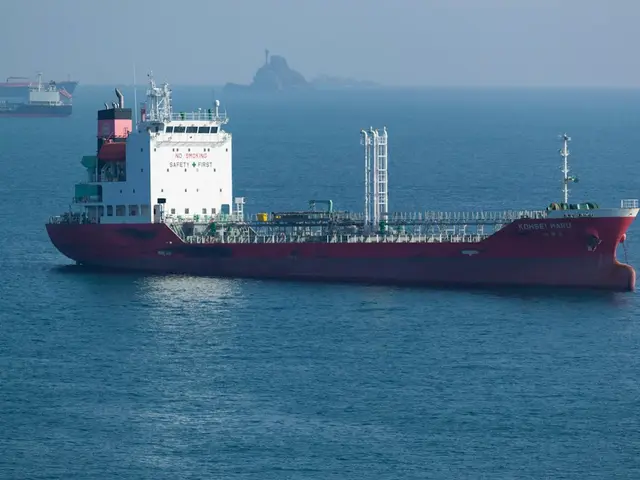
- WTI Midland: grade, loading and pricing basis
- Documents checked before the Deal Room
- Contacts stay masked until the match
This grade
What WTI Midland is and how it reaches the coast
West Texas Intermediate started as a name for the crude gathered across Texas and Oklahoma. Today there are two meanings worth keeping apart. The NYMEX light sweet crude futures contract, the "WTI" quoted in the news, is delivered by pipeline at Cushing, Oklahoma, and CME's rulebook accepts domestic streams from 37° to 42° API with up to 0.42% sulphur. WTI Midland is narrower. It is Permian crude priced at the Midland, Texas pipeline hub and shipped to the Gulf Coast for export, and the agencies and exchanges that trade it hold it to a tighter band.
S&P Global Platts set its WTI Midland specification in August 2020: 40° to 44° API and no more than 0.2% sulphur, with further limits on mercaptans, iron and other items that matter to refiners. ICE moved its Midland WTI futures contract to the same 40–44° API and under 0.2% sulphur in late 2021. Magellan's MEH-WTI program at its East Houston terminal (Magellan is now part of ONEOK) is tighter again, at 41.0° to 43.5° API, and requires the crude to come straight from the Permian without blending. When Platts tracked 83 WTI Midland cargoes delivered into Rotterdam between May 2023 and January 2024, the average was about 43° API and 0.12% sulphur, and four cargoes fell outside the specification.
That last point is the useful one for buyers. WTI Midland is a pipeline blend of output from thousands of wells, not one field, and its quality depends on which pipeline carried it and what else was in the line. Argus has reported buyer worries about mercaptan levels in some Gulf Coast cargoes, and some Corpus Christi pipelines set their own mercaptan limits. Our guide to reading a crude oil assay explains API, sulphur and the other lines, and why a cargo's certificate of quality beats any typical figure.
The US only started exporting crude freely after Congress lifted a 40-year ban on 18 December 2015. The first cargo left Corpus Christi on 31 December that year, and Houston followed days later. Today the crude is piped from the Permian to two main export areas. Corpus Christi, where the first cargo loaded, is one; its 54-foot channel stops a very large crude carrier (VLCC) from loading fully, so ships leave part-loaded or top up offshore from smaller tankers, a step called reverse lightering. A deepening to about 75 feet was authorised in 2024. Houston loads at terminals on the Ship Channel and around the MEH and Enterprise ECHO hubs. The Louisiana Offshore Oil Port (LOOP) is the one US terminal that has loaded a fully laden VLCC for export.
- Platts and ICE specification: 40° to 44° API, sulphur 0.2% max, plus mercaptan, iron and other limits. MEH-WTI: 41.0° to 43.5° API.
- Typical delivered quality (Platts, 83 Rotterdam cargoes, 2023–24): about 43° API, 0.12% sulphur. Light and sweet, close to the North Sea grades.
- Not the same as NYMEX WTI at Cushing, which allows 37° to 42° API and up to 0.42% sulphur.
- Loading: FOB Corpus Christi or Houston-area terminals; full VLCC cargoes from Corpus Christi are topped up offshore by reverse lightering.
- Sellers of origin: many producers and traders, not one state marketer.
This grade
How WTI Midland is priced (named, not quoted)
On the Gulf Coast, physical WTI is usually traded as a differential to the NYMEX WTI futures price. Argus publishes daily assessments at Midland and at Houston, where "Argus WTI Houston" covers Midland-quality crude delivered at the MEH terminal, and its American GulfCoast Select (AGS) assessment reflects Houston-area export-quality WTI. ICE lists futures for Midland WTI delivered on the Gulf Coast. A US Gulf offer will normally name one of these, a pricing period and a differential.
In Europe the grade has a bigger role. From the 2 May 2023 assessment, Platts started including WTI Midland cargoes delivered into Rotterdam in Dated Brent, for deliveries from June 2023, netting their value back to a North Sea basis so they compete with Brent, Forties, Oseberg, Ekofisk and Troll. Platts only counts cargoes loaded at approved Gulf Coast terminals and meeting its specification. So a cargo heading to Europe or the Mediterranean is often priced against Dated Brent, or against Platts' own CIF or DAP WTI Midland assessments. Our Platts and Argus guide explains how to name an assessment in a contract.
A believable offer reads something like "WTI Midland, FOB Corpus Christi, laycan X, priced at NYMEX WTI plus or minus a differential over the loading month", or a CIF Rotterdam cargo against Dated Brent. A flat price per barrel with no benchmark, "WTI at Brent minus" with no period, or a price far below the US market with no reason given does not match how the grade is sold. TradeNexusMarket does not publish prices or differentials; use your own licensed data, and see the crude oil page for how crude deals are usually structured.
This grade
Who sells WTI Midland, export rules, and what to ask for
Unlike Basrah or Bonny Light, there is no national oil company selling WTI. Producers in the Permian sell to pipeline shippers, refiners and trading houses, and the exporters are mostly large traders, oil majors and producers with their own dock space. A small company can genuinely resell a cargo it has bought, but it should be able to name the terminal, the laycan and the company that holds the barrels, and show a written link to them. "Direct from the refinery" makes no sense for crude, since refineries buy crude rather than sell it.
On rules, US-origin crude is not under sanctions, and since the export ban ended the Commerce Department has not required an export licence for most crude shipments (it formally removed the old licence rule in 2016). Exports to embargoed countries or to sanctioned or denied parties are a different matter and still need a licence or are banned outright, and buyers in other jurisdictions have their own screening duties. Check the counterparties against the OFAC list and check the tanker as well, because a real US cargo can still be lifted by a ship you would not want to charter. Our vessel sanctions screening guide and our Q88 and vessel vetting guide cover that part. This is general information, not legal advice.
The paperwork follows the loading. Ask for the load port and terminal, the laycan, the cargo size and the vessel once nominated. After loading, the bill of lading and the certificates of quantity, quality and origin should name the same US terminal and ship, and the quality certificate should fit the band above. Reverse-lightered VLCC cargoes add ship-to-ship documents for each top-up, which is normal here and should be explained, not hidden. For the order of documents see our deal-process guide; for who pays for waiting time at a busy Gulf port see our laytime and demurrage guide; and for FOB versus CIF on a crude cargo see our Incoterms guide.
Houston is also an export base for refined fuels, and the differences are worth knowing if an offer bundles them: our EN590 Houston page explains export diesel versus US domestic ULSD. Before two companies meet on TradeNexusMarket, our team checks the papers described in the Deal Room rules. You can see what members have posted on the public board, or open a free account to post a requirement.
- Load port and terminal named (Corpus Christi, Houston-area or LOOP), with laycan and cargo size.
- The company holding the barrels named, with a written link between it and the seller.
- Certificate of quality within 40° to 44° API and 0.2% sulphur, from an inspector you can confirm.
- Bill of lading, quantity and origin certificates naming the same terminal and ship, plus ship-to-ship papers if reverse-lightered.
- Price written against NYMEX WTI, an Argus Gulf assessment or Dated Brent, with a pricing period.
WTI Midland-specific red flags
- "WTI" with a spec sheet showing 38° API and 0.4% sulphur. That fits the Cushing futures grade, not export WTI Midland.
- A cargo "in tanks at Cushing" offered FOB Houston, or crude said to be stored at a refinery for sale. Refineries buy crude; they don't stock it for resale.
- A fully laden VLCC offered FOB Corpus Christi at the dock. The channel depth does not allow it; full VLCC cargoes are reverse-lightered offshore.
- A seller who cannot name the terminal or laycan but asks for an ICPO, proof of funds or a bank letter first.
- A big discount to NYMEX WTI or Dated Brent with no stated reason. US crude trades in one of the most transparent markets there is.
- US-origin papers on a cargo that loaded somewhere else, or a voyage with ship-to-ship transfers outside the US Gulf that nobody explains.
- A "US government licence" or "export allocation" sold for a fee. Most US crude exports need no licence, and there is no allocation system.
- One quality sheet reused for WTI, Bonny Light and Murban, or numbers rounded to whole figures.
FAQ
Crude oil at WTI Midland
What are the API gravity and sulphur content of WTI Midland?
Platts and ICE specify 40° to 44° API and no more than 0.2% sulphur. Cargoes Platts tracked into Rotterdam in 2023–24 averaged about 43° API and 0.12% sulphur. The certificate of quality for your cargo is what counts.
Is WTI Midland the same as WTI?
Not exactly. NYMEX WTI futures are delivered at Cushing, Oklahoma, and accept 37° to 42° API with up to 0.42% sulphur. WTI Midland is the Permian export-quality crude priced at Midland and shipped to the Gulf Coast, held to a tighter 40° to 44° API band.
Is WTI Midland part of Dated Brent?
Yes. Since the 2 May 2023 assessment, Platts has included WTI Midland cargoes delivered into Rotterdam in Dated Brent, for deliveries from June 2023, alongside Brent, Forties, Oseberg, Ekofisk and Troll.
Do I need a US export licence to buy WTI Midland?
For most destinations, no. The US lifted its crude export ban in December 2015 and removed the related licence requirement in 2016. Exports to embargoed countries or sanctioned parties still need a licence or are prohibited, so take compliance advice for your own case.
Can I post a WTI Midland requirement or offer on TradeNexusMarket?
Yes, posting is free. Name the grade, quantity, FOB load port or CIF destination and the laycan. Sellers need proof of product or a written mandate from the company holding the cargo before a Deal Room opens, and our team checks it.
Guides
Read before you trade this grade
- Guide · Crude oilHow to read a crude oil assay for the first time
- Guide · Pricing referencesPlatts and Argus benchmarks explained: CIF NWE, FOB Singapore and FOB Arab Gulf
- Guide · Deal documentsIncoterms 2020 for oil cargoes: FOB, CIF, CFR and DAP explained
- Guide · ShippingLaytime and demurrage: a plain guide for first-time oil cargo buyers
- Guide · ComplianceVessel sanctions screening and AIS gaps: the ship checks to run before you sign
- Guide · ShippingQ88 and vessel vetting: how a buyer checks the tanker before accepting it
- Guide · Crude oilLOI, ICPO, SPA, POP: the crude oil deal process in plain English
- Guide · Red flagsThe most common petroleum trading scams, and the paper trail that exposes them
Post a WTI Midland requirement or offer
Open a free account and post what you need or what you supply for WTI Midland. Our team looks for the other side and checks both companies before the Deal Room opens. See what members have posted on the public board.