EN590 · Houston (US Gulf Coast)
EN590 from Houston and the US Gulf Coast: export-grade diesel, not domestic ULSD
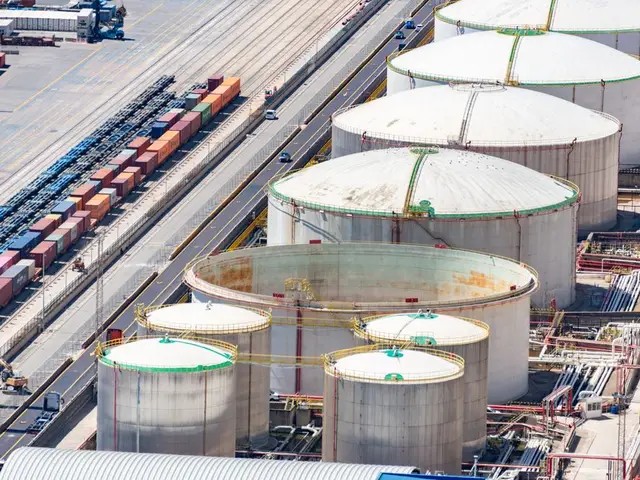
- Houston (US Gulf Coast) logistics, plain language
- Documents checked before the Deal Room
- Contacts stay masked until the match
At this hub
How export diesel moves on the US Gulf Coast
Start with the specification, because it decides everything else. Diesel sold for US roads is made to ASTM D975, and the grade at the pump is No. 2-D S15, the American ultra-low sulphur diesel. EN590 is a European standard. The two overlap, but D975 is looser on almost every line that matters to a European or Latin American buyer. The list at the end of this section sets the main limits side by side.
So a refinery's US-market diesel can pass every American rule and still fail EN 590. The export grade is made, blended and certified separately, usually to EN 590 limits, often with a cold-flow figure set for the destination's season. When someone offers "ULSD FOB Houston" and "EN590 FOB Houston" as if they were the same thing, they are either loose with words or not close to the product. Our EN590 specification guide lists every EN 590 property, and the Rotterdam hub shows what European buyers expect to see on arrival. The same domestic-versus-export split applies to jet fuel on this coast, which our Jet A-1 Houston page explains, and to crude, where export-quality WTI Midland is held to a tighter band than the WTI on the futures screen.
Houston also works differently from Rotterdam, Fujairah or Singapore. Those hubs are storage-and-resale centres where product from many origins sits in rented tanks and changes owner in place. The Gulf Coast is refinery-led. Most export diesel is produced by refiners between Corpus Christi and Louisiana and loaded either at the refiners' own docks or at large third-party terminals on the Ship Channel. Kinder Morgan's Galena Park and Pasadena terminals, for example, publish ship and barge docks for refined products, and Pasadena lists connections to the Colonial and Explorer pipelines that carry fuel north and east to the rest of the country.
That pipeline link matters for exports. Diesel that could be shipped inland on Colonial competes with the export dock, so whether a cargo leaves by sea depends partly on how US inland demand compares with prices abroad. Barges shuttle product between refineries and terminals along the channel and the Gulf Intracoastal Waterway before it goes onto a tanker. A typical export lot is a medium-range tanker load of around 300,000 barrels, roughly 40,000 metric tons.
Where it goes has shifted over the years. OPIS reported that the Gulf Coast handled about nine in ten barrels of US distillate and jet exports in the first nine months of 2025, with more than 70% of the region's shipments heading to Latin America and the Caribbean. EIA figures cited by industry press show Mexico as the largest single destination for US diesel in 2025, followed by Chile and Brazil. Europe takes cargoes when the price gap across the Atlantic opens.
- Sulphur: D975 S15 allows up to 15 ppm; EN 590 allows 10 mg/kg. A 12 ppm US cargo is legal ULSD and still off-spec EN590.
- Cetane: D975 asks for a cetane number of 40; EN 590 needs 51, plus a cetane index of 46.
- Density: EN 590 requires 820 to 845 kg/m³ at 15 °C; D975 sets no density limit at all.
- Lubricity and flash point: D975 permits a wear scar up to 520 µm and a 52 °C flash point; EN 590 caps wear at 460 µm and needs a flash point above 55 °C.
- Bio content and cold flow: D975 allows up to 5% biodiesel and leaves cloud point to buyer and seller; EN 590 allows up to 7% FAME and sets cold-flow classes by country and season.
At this hub
Price benchmark (named, not quoted)
The cargo reference for this trade is S&P Global Platts' FOB US Gulf Coast Export ULSD assessment, launched in December 2014 precisely because exported diesel had become a different product from the pipeline barrel. Platts says it reflects EN590-quality diesel, free of biofuels, in cargoes of about 300,000 barrels loading 7 to 21 days ahead. Loadings anywhere from Corpus Christi, Texas, to Pascagoula, Mississippi, are normalised to a Houston basis. ICE lists a cash-settled futures contract on that assessment, which lets traders hedge the export grade directly.
Two more references sit around it. Inland, Platts assesses ULSD moving on the Colonial Pipeline with input at Pasadena, Texas; Colonial ships in scheduled cycles, about six a month, and its ultra-low sulphur diesel grade is known by its code, 62. Many US physical deals are also written as a differential to the NYMEX NY Harbor ULSD futures contract rather than as a flat price. In practice an export offer may therefore be quoted as "Gulf Coast pipeline plus", "NYMEX plus" or as an outright export price, and a genuine offer always says which one, for which loading window.
One quirk is specific to the US. Domestic fuel carries a compliance cost under the Renewable Fuel Standard, tracked through tradeable credits called RINs. Platts deducts that value from its export cargo assessments, because a barrel that leaves the country does not carry the obligation in the same way. If a seller's numbers do not say whether they include or exclude it, ask. Argus and OPIS publish their own Gulf Coast diesel assessments too. TradeNexusMarket does not publish prices; buyers should use their own licensed data.
At this hub
Incoterms, export filings and documents on the Gulf Coast
Most export deals are FOB a named US Gulf terminal, with the buyer chartering and nominating the ship, or CFR and CIF to the buyer's port when the seller controls the freight. Under the Platts basis the seller, as the party holding the terminal slot, declares the loading terminal and dates, and the buyer's vessel must then be accepted by that terminal. If the terminal cannot load within the laycan, public dock and demurrage clauses decide who pays for waiting time, so read them before signing.
US export filings give you two concrete checks. First, Census rules under the Foreign Trade Regulations require Electronic Export Information to be filed in the Automated Export System for shipments of this size, and for vessel cargo the filing has to be made at least 24 hours before loading. The filer is the US principal party in interest or its authorised agent, who receives an Internal Transaction Number (ITN). A real exporter knows who the USPPI is and who will file. Second, EPA fuel rules let fuel destined for export sit outside US fuel standards, provided the product transfer documents carry the statement "This fuel is for export from the United States only." The PTD, the ITN reference and the bill of lading should all tell the same story.
Quality documents follow the usual pattern: a certificate of quality from the shore tank or the loading line, tested against EN 590 limits and naming the edition the SPA cites, plus the independent inspector's quantity and quality reports at loading. SGS, Intertek, Bureau Veritas, Saybolt and AmSpec all have a long public presence on the Houston Ship Channel. Name a buyer-nominated or joint inspector in the contract, and check any report with the issuing office using our SGS and Intertek verification guide.
Origin is part of the paper trail here in a way it is not elsewhere. Since March 2022, Executive Order 14066 has banned imports of Russian-origin crude oil and refined petroleum products into the United States. Any offer of "Russian EN590" or Russian-origin diesel stored in Houston therefore describes either a product that does not exist or an illegal import. We list such grades for information only and do not match them. EU or UK rules may also bind you depending on where the cargo is going and who finances or insures it.
- FOB a named US Gulf terminal, or CFR/CIF to your port; the terminal and loading window in writing.
- Who the USPPI is, who files the EEI, and the ITN reference before loading.
- PTD carrying the EPA "for export from the United States only" statement.
- CoQ tested against EN 590, not ASTM D975, and the inspector's loading reports.
- Certificate of origin and a sanctions decision made before any payment. The seller checklist has the steps, and the Deal Room rules show what we check before an introduction.
Houston-specific red flags
- "EN590 FOB Houston" backed by a certificate that tests against ASTM D975, says only "ULSD 15 ppm", or leaves out density, cetane and polycyclic aromatics.
- Russian-origin EN590 said to be sitting in a Houston or Texas tank. US law has banned those imports since March 2022.
- A tank-to-tank offer with no terminal name, tank number or storage-client company, or a tank storage receipt on a large terminal operator's letterhead that the terminal itself will not confirm.
- A seller who cannot say who the US exporter of record is, who files the EEI, or which Gulf port the cargo loads from ("any USGC port").
- Biodiesel or FAME on the certificate of a cargo sold as export ULSD, when the export benchmark grade is biofuel-free. It may be legal, but it is not what the price assumes.
- "D6 virgin fuel oil" and EN590 bundled in the same Houston offer sheet; our D6 guide, listed below, explains why that label is a warning on its own.
- Requests for terminal, dip-test or "export permit" fees paid to the seller before your inspector reaches the product.
FAQ
EN590 at Houston
Is US ULSD the same as EN590?
No. US road diesel is made to ASTM D975, which allows up to 15 ppm sulphur, a cetane number of 40 and sets no density limit. EN 590 caps sulphur at 10 mg/kg, needs a cetane number of 51 and a density between 820 and 845 kg/m³. Export cargoes from the US Gulf are made to EN 590 as a separate grade.
What does the Platts FOB USGC Export ULSD price reflect?
Platts says the assessment reflects EN590-quality, biofuel-free diesel in cargoes of about 300,000 barrels loading 7 to 21 days ahead, normalised to Houston from terminals between Corpus Christi and Pascagoula. The value of US renewable fuel credits (RINs) is deducted. We name the benchmark but do not publish prices.
Who files the export paperwork for a Houston diesel cargo?
The US principal party in interest, or an agent it authorises, files Electronic Export Information in the Automated Export System and receives an ITN. For vessel cargo this must happen at least 24 hours before loading. The product transfer documents should also carry EPA's export-only statement.
Can I buy Russian-origin EN590 in Houston?
No. Executive Order 14066 has prohibited importing Russian-origin petroleum products into the United States since March 2022, so a genuine Russian cargo should not be in a Houston tank. We treat such offers as a red flag and list Russian-route grades for information only.
Can I post an EN590 requirement for the US Gulf on TradeNexusMarket?
Yes, and posting is free. Say whether you want FOB a US Gulf terminal or CFR/CIF to your port, plus the EN 590 edition, cold-flow class, quantity and loading window. Our team matches on product, spec, quantity, port, Incoterm and timing, and checks both companies' documents before a Deal Room opens.
Guides
Read before you trade at this hub
- Guide · EN590The EN590 10ppm specification explained, line by line
- Guide · EN590How to check whether an EN590 seller is real: a 10-point checklist
- Guide · Deal documentsHow to verify an SGS or Intertek report with the issuer
- Guide · Deal documentsIncoterms 2020 for oil cargoes: FOB, CIF, CFR and DAP explained
- Guide · Fuel oilWhat "D6 virgin fuel oil" really is, and what to ask for instead
- Guide · Deal documentsWhat a TSR (tank storage receipt) is, and how to check one
- Guide · Red flagsWhy "MT103 after dip test" is a warning sign in fuel offers
- Guide · Crude oilLOI, ICPO, SPA, POP: the crude oil deal process in plain English
- Guide · Payment and trustHow escrow, payment instruments and verification protect energy buyers
- Guide · Deal structuresTTT vs TTO vs TTV: how diesel actually changes hands at a terminal
Post EN590 for Houston
Open a free account and post what you need or what you supply at Houston (US Gulf Coast). Our team looks for the other side and checks both companies before the Deal Room opens. See what members have posted on the public board.