EN590 · Fujairah (FOIZ)
EN590 10ppm at Fujairah: FOIZ tanks, the port manifold and how deals actually move
- Fujairah (FOIZ) logistics, plain language
- Documents checked before the Deal Room
- Contacts stay masked until the match
At this hub
How EN590 moves at Fujairah
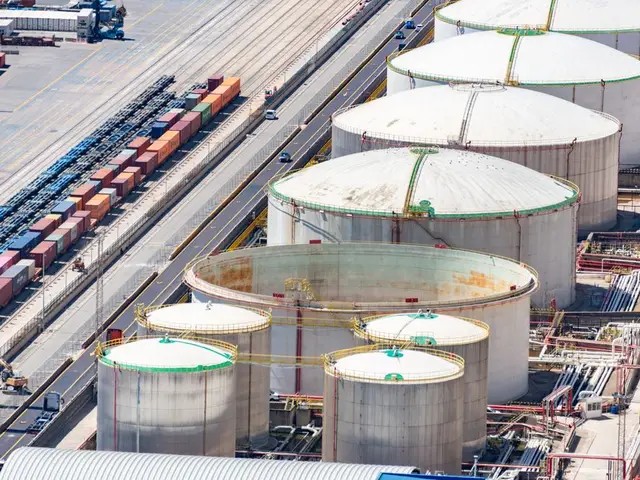
Almost all oil storage at Fujairah sits inside the Fujairah Oil Industry Zone (FOIZ), a government zone that wraps around the Port of Fujairah to the north and west. FOIZ describes itself as hosting eighteen terminals with storage in the region of 70 million barrels across all products. Operators such as VTTI Fujairah, Vopak Horizon Fujairah, Fujairah Oil Terminal (FOT) and Brooge Petroleum and Gas Investment Company (BPGIC) publish their facilities there, and several list gasoil among the clean products they handle. Naming them is a public fact about the hub. TradeNexusMarket has no tie to any of them, and tank space, tank numbers and availability are only ever confirmed with the terminal for a specific deal. Crude runs on a separate system: ADNOC exports its Murban grade from its own Fujairah terminal, fed by pipeline from Habshan, which our Murban page covers.
What sets Fujairah apart from ARA is its common-user design. The port's oil terminal (FOTT) runs the berths, and the storage terminals connect to them through two matrix manifold systems. A tanker at a port berth can load from, or discharge to, any connected terminal, and product can move from one terminal's tanks to another's through the manifold without chartering a vessel. So a transfer between two different companies' terminals is an ordinary pipeline operation here, not a short sea voyage or a barge trip. Port data reported by S&P Global for 2022 counted about 13 million mt traded between terminals inside the hub, on top of 96 million mt of imports and exports.
Lot sizes follow the ships that call. The Platts FOB Fujairah gasoil assessment reflects cargoes of 200,000–300,000 barrels, which for diesel is roughly 27,000–40,000 MT, a typical medium-range (MR) tanker parcel. Larger LR cargoes load for longer routes, and smaller parcels go to nearby Gulf, Red Sea, East African and South Asian discharge ports. Inside the zone, an in-tank or terminal-to-terminal transfer moves whatever the two tanks and the operators accept, which is why smaller resale lots appear here. Bunker barges loaded at the port serve ships at the Fujairah Anchorage Area, but marine fuel supply is a separate business from buying bulk EN590.
TTT at Fujairah usually means one of two things: a transfer between two storage clients inside the same terminal, or a terminal-to-terminal move over the port manifold. Either way it runs on written instructions from the company that holds the tank, accepted by the terminal (and scheduled with the port for a manifold move), with an inspector measuring before and after. TTV is the lift from tank to a nominated vessel at a port berth. Platts' methodology for its FOB Fujairah gasoline assessment, for example, has the seller declare the loading terminal and the buyer nominate the vessel ahead of the loading window, subject to terminal acceptance. That is a fair picture of what a real nomination sequence looks like. Our guide to TTT vs TTO vs TTV covers how each structure is verified.
- Vessel (FOB Fujairah): MR-size parcels are the reference; the seller declares the terminal and the buyer nominates the ship.
- Terminal-to-terminal: over the port's matrix manifold, with no vessel charter.
- In-tank TTT: title moves in the tank on the holder's instruction; the inspector measures before and after.
- Bunker supply at the anchorage is a separate market, not a route to bulk EN590.
At this hub
Price benchmark (named, not quoted)
For 10ppm diesel and gasoil east of Suez, traders in the Middle East commonly point to S&P Global Platts' Gasoil 10ppm FOB Arab Gulf assessment and to Platts' FOB Fujairah gasoil assessment, launched in 2016. Platts builds the Fujairah figure from the Middle East gasoil spot differential plus the MOPAG (Mean of Platts Arab Gulf) gasoil strip, so many term deals and swaps in the region are written against MOPAG. Argus also publishes Middle East products assessments that some parties use.
One detail matters for EN590 buyers. The Platts assessment is for gasoil with a maximum of 10ppm sulphur. An EN590 cargo must also meet the rest of the EN 590 standard: cetane, density, flash point, cold flow and so on. Fujairah stores and blends product from many refineries, so the specification on the inspector's certificate is what counts, not the label in the offer. Our EN590 specification guide lists the main limits.
Two public data sets are useful context. FOIZ and S&P Global publish weekly aggregate inventories for light distillates, middle distillates and heavy distillates and residues held in FOIZ terminals, compiled by the Fujairah Energy Data Committee (FEDCom). The figures show stock trends for the zone as a whole, not who owns what, so they cannot confirm any single seller's tank. TradeNexusMarket does not publish prices, differentials or "today's Platts". If an offer cites a print you cannot check through your own market data, treat it as a verification problem, not a bargain.
At this hub
Incoterms, zone status and documents at Fujairah
FOB Fujairah is the standard seagoing basis: the seller delivers on board the buyer's nominated vessel at a port berth, and freight and insurance onward are the buyer's concern. CFR or CIF to a discharge port is common when the seller controls the ship. Inside FOIZ, many deals are written ex-tank or in-tank with a TTT, so the paper trail is the tank holder's transfer instruction, the terminal's confirmation, a new tank storage receipt and the inspector's certificates rather than a full bill of lading set. Our TSR guide explains what a storage receipt proves and what it doesn't.
Zone and customs status should be stated plainly. Terminals in the zone describe their storage as bonded, and product held there for re-export is in a different position from product imported into the UAE for local sale, which needs its own import formalities and a locally licensed buyer. Many storage clients and some operators are licensed as companies in the Fujairah Free Zone, which is a separate authority from FOIZ. A seller's licence should name the exact entity and the issuing authority, and you can confirm a UAE free-zone licence with that authority directly. A storage agreement or terminal confirmation should name the same company that signs the SPA.
Origin and sanctions screening weigh more here than at most hubs. Fujairah stores, blends and re-exports product from many origins, and industry reporting since 2022 has described the hub and its anchorage as a transit and ship-to-ship point for Russian-origin and other restricted cargoes. Depending on who you are, which bank and insurer you use and where the cargo goes, EU, UK and US sanctions and the G7 price cap can prohibit or limit dealing in Russian-origin products. Our pages treat Russian-route product as information only. A genuine seller can show refinery origin through the certificate of origin and load-port quality papers, and your bank and insurer will ask for them. Get your own legal and compliance advice before you sign; this page is not that advice.
Independent inspection companies with a long public presence in the UAE, such as SGS, Intertek, Bureau Veritas and Saybolt among others, commonly carry out quantity and quality work at Fujairah. Buyer-nominated or jointly nominated inspection is normal and should be written into the SPA. A typical document set includes company papers for both sides, a proof of product (a TSR or terminal confirmation naming the terminal, the storage client and the tank), the SPA, the payment instrument, the inspector's Q&Q and, for vessel lifts, the bill of lading, certificate of quality and certificate of origin. The order these come in is set out in our deal-process guide, and how money should move is in our escrow and verification guide. For comparison, see our EN590 Rotterdam page for Europe and our EN590 Singapore page for Asia.
- FOB Fujairah for vessels; ex-tank and TTT inside FOIZ.
- Bonded / re-export vs UAE-imported status must match the terminal's paperwork.
- Free-zone licence confirmed with the issuing authority, not only from a PDF.
- Certificate of origin and load-port quality papers for sanctions screening.
- TSR or terminal confirmation checked with the terminal through contacts you find yourself. Our seller checklist has the steps, and the Deal Room rules show what we check before introductions.
Fujairah-specific red flags
- "TTT Fujairah" offers with no terminal name, no tank number and no storage-client company you can check. This is the most common shape of a fake Fujairah offer.
- A "Fujairah terminal" you cannot match to a publicly known FOIZ operator, or terminal contact details that come only from the seller.
- Large repeat volumes on a 12-month contract from a party that cannot show a single tank in its own name or its supplier's.
- Requests for "tank rental", "injection fees" or "dip test charges" paid to the seller before your inspector has access to the tank.
- Vague or shifting origin ("Middle East origin", "blend", "any origin") or a refusal to supply a certificate of origin on product that needs sanctions screening.
- Ship-to-ship product at the anchorage presented as "in-tank", or a vessel whose name, IMO number and tracking history the seller will not share.
- One chain that switches between "TTT Fujairah", other UAE or Omani ports and "CIF anywhere" as soon as you ask for documents, with pressure for an ICPO or fee the same day.
FAQ
EN590 at Fujairah
Is 10ppm gasoil at Fujairah the same as EN590?
Not automatically. Platts' Arab Gulf and Fujairah gasoil assessments are for gasoil with a maximum of 10ppm sulphur. EN590 is the full European EN 590 specification, which also sets limits for cetane, density, flash point, cold flow and more. Some 10ppm gasoil in Fujairah meets EN 590 and some does not, so the inspector's certificate against the EN 590 limits is what settles it.
What does FOB Fujairah mean in an EN590 deal?
The seller delivers the diesel on board the vessel the buyer nominates at a Port of Fujairah berth. Under Incoterms 2020, risk and cost generally pass at that point, subject to what the SPA says. Freight, insurance and discharge are the buyer's. In-tank transfers inside FOIZ are normally written ex-tank instead, with a terminal transfer and inspection replacing the vessel loading.
How do I check a Fujairah tank offer?
Ask for the terminal name, the tank number, the storage-client company and a recent TSR or terminal confirmation. Then contact the terminal yourself using details from its own website, not the seller's, and confirm the company is a storage client and the product is in that tank. Nominate your own inspector before any money moves. If any of those steps is refused, stop there.
Why does origin matter so much for Fujairah cargoes?
Fujairah stores and blends product from many sources, and some of what passes through the region is Russian-origin or otherwise restricted. Depending on your company, your bank, your insurer and the destination, sanctions or the G7 price cap may stop you dealing in it. Ask for the certificate of origin and load-port papers early, and take compliance advice before signing.
Can I post an EN590 requirement for Fujairah on TradeNexusMarket?
Yes. Posting is free. Say whether you need FOB Fujairah, an in-tank TTT inside FOIZ or CFR to your port, plus quantity and window. Our team matches on product, spec, quantity, port, Incoterm and timing, and checks both companies' documents before a Deal Room opens. We do not quote Platts prices or hold stock ourselves.
Guides
Read before you trade at this hub
- Guide · Deal structuresTTT vs TTO vs TTV: how diesel actually changes hands at a terminal
- Guide · Red flagsWhy "MT103 after dip test" is a warning sign in fuel offers
- Guide · Deal documentsWhat a TSR (tank storage receipt) is, and how to check one
- Guide · Deal documentsATV, ATS and DTA: what these storage documents mean, and who can really issue them
- Guide · Deal documentsHow to verify an SGS or Intertek report with the issuer
- Guide · EN590How to check whether an EN590 seller is real: a 10-point checklist
- Guide · Crude oilLOI, ICPO, SPA, POP: the crude oil deal process in plain English
- Guide · Deal documentsIncoterms 2020 for oil cargoes: FOB, CIF, CFR and DAP explained
- Guide · Payment and trustHow escrow, payment instruments and verification protect energy buyers
- Guide · EN590The EN590 10ppm specification explained, line by line
Post EN590 for Fujairah
Open a free account and post what you need or what you supply at Fujairah (FOIZ). Our team looks for the other side and checks both companies before the Deal Room opens. See what members have posted on the public board.