Jet A-1 · Fujairah (FOIZ)
Jet A-1 at Fujairah: jet/kero cargoes, stored batches and the papers that keep them saleable
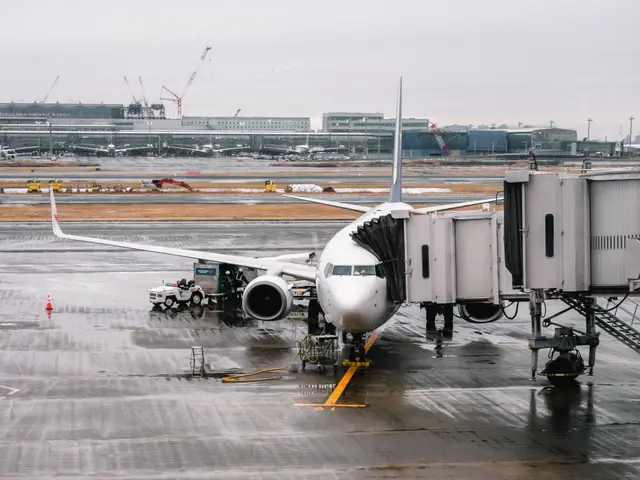
- Fujairah (FOIZ) logistics, plain language
- Documents checked before the Deal Room
- Contacts stay masked until the match
At this hub
How jet fuel moves through Fujairah
Fujairah's storage sits in the Fujairah Oil Industry Zone (FOIZ), and its terminals are tied to the port's berths through a shared manifold. Our EN590 Fujairah page explains that layout. What matters for jet is narrower: not every terminal in the zone handles it. Vopak Horizon Fujairah and VTTI Fujairah both list jet fuel and kerosene among the products they store, while some other operators publish tank lists with no jet service at all. Naming those two is a public fact about the hub, not a tie: TradeNexusMarket has no link to either. The practical point is simple. A Fujairah jet offer should name a terminal that actually runs jet tanks, and ideally a tank that is kept in jet service rather than switched between products.
Much of the jet traded through Fujairah is made at refineries elsewhere in the Gulf and beyond, and traders use the hub's tanks to hold cargoes, combine parcels and reload them onto ships sized for the next route: long-haul tankers west of Suez to Europe, and smaller ships to nearby markets such as the Red Sea and East Africa. For diesel, blending and breaking bulk are routine. For jet, every one of those steps is a point where the batch's quality history has to be carried forward on paper, which is why the same physical moves can be simple for gasoil and slow for jet.
2026 changed the backdrop. In March, during the Iran war, drone strikes and fires halted loadings at Fujairah more than once, as Reuters, Bloomberg and Argus reported at the time. The effective closure of the Strait of Hormuz cut Gulf exports, and the International Energy Agency said Middle East jet arrivals into Europe collapsed in April. Saudi Arabia rerouted some jet through its Red Sea port of Yanbu, and Kuwait lifted its force majeure notices in June. Fujairah sits outside the strait, so it kept working while ports inside the Gulf struggled, but tanker traffic through Hormuz was still well below normal in October 2026. For a buyer, that history shows up in the documents: batches loaded before the disruption and stored for months, cargoes that waited at anchor, and routes that changed after loading.
In-tank deals for jet are possible here, but they work differently from diesel. A transfer between storage clients, or between terminals over the manifold, is a point where the fuel has to be shown to be unchanged. Our guide to TTT, TTO and TTV explains the transfer structures. For jet, the question to ask alongside them is which certificate will go with the product after the move, and who will sign it.
- Terminal: one that publishes jet fuel or kerosene among the products it handles, with the tank kept in jet service.
- Cargo out (FOB Fujairah): ships sized for Europe, the Red Sea, East Africa or other nearby markets.
- In-tank / TTT: only with a quality history that a recertification lab can follow.
- 2026 disruption: check load dates, time in storage and any route change on the papers.
At this hub
Price benchmarks for Gulf jet (named, not quoted)
S&P Global Platts launched outright FOB Fujairah assessments for jet fuel/kerosene, gasoil, gasoline and fuel oil on 3 October 2016. The jet figure reflects cargoes of typically 200,000–300,000 barrels loading 20–40 days ahead. Platts builds it from a Middle East jet/kero spot differential plus the MOPAG strip, the average of swap values over a 21-day period 20–40 days forward, with its market-on-close window ending at 12:30 Fujairah time. Platts also publishes an FOB Arab Gulf jet/kero value, and in January 2026 it brought back an Arab Gulf netback calculated from Singapore using a long-range (LR2) tanker freight rate. Argus and other agencies publish their own Middle East jet assessments.
Two features of these benchmarks trip up new buyers. First, "FOB Fujairah" is a price basis, not a location claim. When Platts set up the assessments it said cargoes from Gulf ports such as Jubail, Ras Tanura, Mina Al Ahmadi, Jebel Ali, Ruwais and Sohar would be considered and normalised to Fujairah. A seller quoting "basis FOB Fujairah" may load you somewhere else entirely, possibly inside the Gulf, so the SPA has to name the load port. Second, the Platts assessment is called jet fuel/kerosene. It reflects Jet A-1 to DEF STAN 91-091, but the trade label covers kerosene for heating and lighting too. The certificate decides which one you are buying.
The benchmarks also carry an origin rule. Since 19 December 2022 Platts has excluded Russia-origin product from all of its Asia and Middle East jet/kero cargo assessments. An offer priced off a Platts Gulf jet assessment that cannot show where its batch was refined is selling something the benchmark leaves out. TradeNexusMarket does not publish prices, differentials or "today's MOPAG". The number for any day comes from your own market data or from what buyer and seller agree in the Deal Room. Our Platts and Argus benchmarks guide explains MOPAG alongside CIF NWE and MOPS.
At this hub
Quality papers, time in storage and screening at Fujairah
The aviation quality chain is the same everywhere: a refinery certificate of quality (RCQ) for the batch, a recertification test certificate after a sea voyage, release papers at each handover. Our Jet A-1 documents guide explains each one. At a storage and blending hub, two parts of that chain carry most of the risk. The first is the sea leg into Fujairah. Under EI/JIG 1530, the standard most international aviation supply chains follow, jet that has travelled by marine tanker has to be retested and recertified before it is used or moved on, and the results have to show no significant change from the earlier certificate. If they do, the batch is quarantined. A Fujairah seller should be able to show the RCQ from the refinery and the recertification certificate issued after the product arrived.
The second is time in the tank. Storage manuals based on EI/JIG 1530 call for a periodic retest when jet has sat unmoved in a terminal tank for more than six months, and further retests while it stays there. In 2026 that is a live question: some product loaded before the Hormuz disruption sat in storage or at anchor for months. Ask when the batch arrived, when it was last tested and which laboratory signed the result. An RCQ dated long before the offer, with nothing after it, does not describe the fuel in the tank today.
Kerosene and jet share tanks, ships and price screens in this region, so the paperwork has to say which product it is. A certificate that lists results against DEF STAN 91-091 or the Joint Fuelling System Checklist (AFQRJOS), signed by the refinery or an accredited laboratory, describes aviation fuel. A sheet headed "kerosene" or "jet/kero" with a handful of results does not, even if the product would pass. The Jet A-1 product page lists the main specification limits.
Screening needs more care at Fujairah than at most hubs. On Russian origin, see the Platts rule above, and if the fuel is heading to Europe, remember that since 21 January 2026 the EU has also banned products refined in third countries from Russian crude, with crude-origin evidence required unless the product comes from a listed partner country; our Jet A-1 Rotterdam page sets out that rule. On Iran, US Treasury designations in 2025 included UAE-registered trading and shipping companies in Iranian petroleum networks, so check every company in the chain, and the vessel, against the OFAC, EU and UK lists, whatever your own jurisdiction. A Fujairah storage receipt is not a certificate of origin. Our pages treat Russian-route product as information only. Take your own legal and compliance advice before signing; this page is not that advice.
Inspection companies such as SGS, Intertek, Bureau Veritas and Saybolt are publicly active in the UAE and commonly measure and sample jet at Fujairah loadings and transfers. Write into the SPA who nominates the inspector, which laboratory runs the recertification and whose result is final, and confirm any report with its issuer using our SGS and Intertek verification guide. The usual document order is in our deal-process guide, how money should move is in the escrow and verification guide, and what we check before two companies meet is in the Deal Room rules.
- RCQ naming the refinery, plus a recertification certificate issued after arrival in Fujairah.
- Date of last test and time in storage; a periodic retest if the batch has sat for months.
- Results against DEF STAN 91-091 or AFQRJOS, not a "jet/kero" summary sheet.
- The load port named in the SPA, not just "basis FOB Fujairah".
- Every company and the vessel screened against OFAC, EU and UK lists. The TSR guide and ATV/ATS/DTA guide cover the storage papers.
Fujairah-specific red flags
- "Jet A-1 FOB Fujairah, in tank" with no terminal, no tank number, or a terminal that does not list jet among the products it handles.
- "Aviation kerosene" or "jet/kero" with no RCQ, or a kerosene certificate offered as proof of Jet A-1.
- An RCQ dated months before the offer, with no recertification after the sea leg and no retest for the time in storage.
- "Basis FOB Fujairah" read as "the cargo is in Fujairah", with the seller refusing to name the actual load port.
- Fees for a "Hormuz risk premium", "war clearance" or "terminal release" paid to the seller or a company it names before your inspector reaches the tank.
- "UAE origin" or "Fujairah origin" with no refinery named. A storage location is not an origin; the RCQ should say which refinery made the batch.
- A "FOIZ" or port-authority letter certifying what is in a private terminal's tank. The terminal confirms holdings, not the zone or the port.
FAQ
Jet A-1 at Fujairah
Is jet/kero at Fujairah the same as Jet A-1?
Not automatically. Platts' Middle East jet/kero assessments reflect Jet A-1 to DEF STAN 91-091, but the trade label also covers kerosene for heating and lighting. Only product with an RCQ against the jet specification, and a clean chain of recertification after transport and storage, can be sold as Jet A-1 to an airport supplier.
What does FOB Fujairah mean for a jet cargo?
It can mean loading at a Fujairah berth, but it is also the basis Platts uses for Gulf jet, normalised from cargoes loading at ports across the region. Make sure the SPA names the actual load port, the terminal and the loading window, and remember that ports inside the Gulf mean a Hormuz transit.
Can I buy Jet A-1 in tank at Fujairah?
Yes, from a terminal that handles jet. Ask for the terminal, the tank number, the storage-client company, the RCQ and the latest recertification or retest, then confirm the holding with the terminal yourself using contact details from its own website. Nominate your own inspector before any money moves.
Can jet stored in Fujairah be sold into Europe?
It can, if the paperwork supports it. Since 21 January 2026 EU importers must show where the crude behind refined products came from, unless the product comes from a listed partner country, and Russian-origin product is banned outright. Ask for the RCQ naming the refinery and crude-origin evidence before you price a European sale.
Did the 2026 Hormuz disruption change how I should check an offer?
It added two checks. Look at the dates: product loaded before the disruption may have sat in storage or at anchor long enough to need a retest. And look at the route: if the cargo has to come out of the Gulf, ask how and when it will transit, and who carries that risk under the SPA.
Guides
Read before you trade at this hub
- Guide · Jet A-1Jet A-1 from refinery to wing: the supply chain and the documents that follow it
- Guide · Deal documentsHow to verify an SGS or Intertek report with the issuer
- Guide · Deal documentsWhat a TSR (tank storage receipt) is, and how to check one
- Guide · Deal documentsATV, ATS and DTA: what these storage documents mean, and who can really issue them
- Guide · Deal structuresTTT vs TTO vs TTV: how diesel actually changes hands at a terminal
- Guide · Red flagsWhy "MT103 after dip test" is a warning sign in fuel offers
- Guide · Crude oilLOI, ICPO, SPA, POP: the crude oil deal process in plain English
- Guide · Deal documentsIncoterms 2020 for oil cargoes: FOB, CIF, CFR and DAP explained
- Guide · Payment and trustHow escrow, payment instruments and verification protect energy buyers
Post Jet A-1 for Fujairah
Open a free account and post what you need or what you supply at Fujairah (FOIZ). Our team looks for the other side and checks both companies before the Deal Room opens. See what members have posted on the public board.