EN590 · Rotterdam (ARA)
EN590 10ppm at Rotterdam (ARA): barges, tanks and how deals actually move
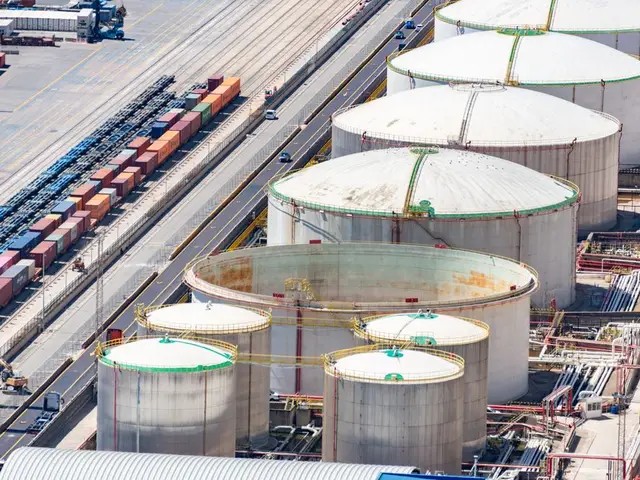
- Rotterdam (ARA) logistics, plain language
- Documents checked before the Deal Room
- Contacts stay masked until the match
At this hub
How EN590 moves at Rotterdam and ARA
ARA is the short name for the Amsterdam–Rotterdam–Antwerp port and storage complex on the North Sea and the Rhine–Meuse delta. For ultra-low sulphur diesel (EN590 / 10ppm), Rotterdam is the busiest of the three nodes: cargoes arrive by sea from European and Atlantic Basin refineries, sit in shore tanks, and leave again as seagoing vessels, as inland barges up the Rhine, or as tank-to-tank transfers inside a terminal.
Storage at facilities such as Vopak, Koole, Maasvlakte Olie Terminal (MOT), and other independent tank farms around the Botlek, Europoort and Maasvlakte zones is commonly used for middle distillates. Naming those operators is a public fact about the hub; it does not mean TradeNexusMarket leases or controls any tank there. Capacity, tank numbers and availability change constantly and are confirmed only with the terminal or the title holder for a specific deal.
Lot sizes follow the logistics, not a single rulebook. Inland barge parcels on the Rhine are often in the low thousands of metric tons (a common working range is roughly 1,000–3,000 MT per barge, sometimes combined). Coastal and short-sea vessels take larger cuts. Full seagoing cargoes for export or import are typically tens of thousands of metric tons, sized to the vessel and the discharge programme. Pipeline and closed-system transfers inside a terminal move whatever volume the two tanks and the operator allow under a tank-to-tank (TTT) or tank-to-vessel (TTV) nomination.
TTT (tank-to-tank) is the usual name for transferring product from the seller's shore tank into the buyer's shore tank at the same or a linked terminal, after quality and quantity are agreed. TTV is the same idea into a nominated vessel. Both sit under an Incoterm such as ex-tank or FOB, plus a terminal nomination and an independent inspection. Barge vs vessel vs pipeline is not a marketing choice: it is fixed by where the buyer needs the product next (Rhine inland, coastal Europe, or deep-sea).
- Barge: Rhine and inland Europe; smaller lots; scheduling through barge brokers and terminal slots.
- Vessel (FOB / CIF): coastal or deep-sea; larger lots; full set of shipping documents.
- Pipeline / closed transfer: inside or between linked terminals when both parties hold tank space.
- TTT / TTV: title and risk shift per the SPA once injection or loading is confirmed and the inspector signs off.
At this hub
Price benchmark (named, not quoted)
Physical EN590 and ULSD around Northwest Europe are commonly discussed against Platts Diesel 10ppm assessments for NWE / ARA (and related barge or cargo quotes published under that family). Argus and other price-reporting agencies also publish Northwest European diesel and gasoil assessments that traders use as a reference.
TradeNexusMarket does not publish prices, differentials or "today's Platts". The benchmark name tells you which assessment parties usually point to in an SPA or a conversation; the number for any day comes from the agency subscription or from what buyer and seller agree in the Deal Room. If an offer cites a Platts or Argus print you cannot check independently, treat that as a verification problem, not a bargain.
At this hub
Incoterms, bonded storage and documents at Rotterdam
FOB Rotterdam (or FOB ARA) is the common seagoing basis: the seller delivers the product over the ship's rail at the named port, and the buyer takes freight and insurance from there. CIF into another European or Mediterranean port is also frequent when the seller controls the vessel. Inside the hub, many deals are written ex-tank or in-tank with a TTT: the product never leaves the terminal complex, so the paper trail is terminal nominations, injection reports and inspector certificates rather than a full bill of lading set.
Customs status matters. Product in bonded (customs warehouse) storage has not yet been released for free circulation in the EU; duty and VAT treatment depend on whether it stays bonded, is exported, or is entered into free circulation. Duty-paid stock is a different commercial and tax position. A genuine seller or storage client can state the status clearly; a vague "EU cleared" claim with no terminal confirmation is a warning sign. Free-zone or bonded language should match what the terminal's own documents say.
Independent inspection companies with a long public presence in the ARA ports — firms such as SGS, Intertek, Bureau Veritas and Saybolt (Core Laboratories) among others — commonly perform quantity and quality work on diesel transfers and loadings. Buyers normally nominate their own inspector (or agree a joint nomination) in the SPA. The inspector's report is separate from a tank storage receipt: one measures what is in the tank or on the vessel; the other is the terminal's statement of who holds what.
Typical documents in a Rotterdam EN590 deal include company papers for both sides, a proof of product (often a recent tank storage receipt or equivalent terminal confirmation), the SPA, the payment instrument (often an LC or SBLC for larger cargoes; sometimes payment after successful TTT for in-tank deals), the inspector's Q&Q, and for seagoing lifts the usual shipping set (B/L, CoQ, certificate of origin where required). For how those fit the wider sequence, see our deal-process and TSR guides linked below. Jet fuel at the same port follows a stricter quality-paper chain; see our Jet A-1 Rotterdam page.
- FOB / CIF for vessels; ex-tank + TTT for in-hub transfers.
- Bonded vs duty-paid status must match terminal paperwork.
- Buyer-nominated or jointly agreed independent inspector for Q&Q.
- TSR / terminal confirmation checked with the terminal, not only with the seller.
Rotterdam-specific red flags
- "Rotterdam tank injection" or "TTT Rotterdam" offers that never name a terminal, a tank number, or a storage-client company you can verify.
- A seller who refuses independent inspection, or insists you use only their inspector and pay before the dip.
- Prices pitched far below any publicly discussed NWE diesel level, with pressure to send an ICPO or "commitment fee" the same day.
- A TSR, ATV or "allocation" on letterhead you cannot match to a real ARA terminal operator, or with contact details supplied only by the seller.
- Long broker chains where nobody can show who holds title in the tank, and every party asks for fees before documents.
- Demands for MT103, "dip and pay", or partial payment before you have confirmed product in a tank your inspector can access.
FAQ
EN590 at Rotterdam
Is EN590 at Rotterdam the same as US ULSD?
They are both ultra-low sulphur diesel grades, but they are not identical specs. EN590 follows the European EN 590 standard (cetane, density, cold-flow and other limits). US road diesel is typically sold to ASTM D975. Cargoes labelled "EN590-spec" for export from the US Gulf are a separate commercial grade from domestic US ULSD. Always match the specification sheet to the destination market.
What does FOB Rotterdam mean for an EN590 deal?
Under FOB (free on board) at Rotterdam, the seller delivers the product on board the vessel nominated by the buyer at the named port. Risk and cost generally pass at that point under Incoterms 2020, subject to what the SPA actually says. Freight, insurance and onward discharge are the buyer's concern. In-tank TTT deals are usually written on an ex-tank basis instead of classic FOB.
Can I buy a small barge lot of EN590 in ARA through TradeNexusMarket?
Members post the quantity and delivery basis they actually need — barge, vessel or TTT. Our team matches on product, spec, quantity, port, Incoterm and window. There is no minimum lot size imposed by the marketplace; the limit is what a real counterparty and a real terminal can perform. Posting is free; documents are checked before the Deal Room.
How do you check a Rotterdam EN590 seller?
Sellers may post without documents. Before a Deal Room opens, our team reviews company papers and at least one proof of product — for in-tank offers that is often a tank storage receipt or terminal confirmation we expect the buyer to be able to verify independently with the terminal. See our EN590 seller checklist and TSR guide for the steps you should still run yourself.
Do you quote Platts Diesel 10ppm NWE on this site?
No. We name the benchmarks traders commonly use so you know what parties are referring to. We do not publish price assessments, differentials or stock claims. Numbers belong in the Deal Room between buyer and seller, against an assessment you can check through your own market data.
Guides
Read before you trade at this hub
- Guide · Deal documentsWhat a TSR (tank storage receipt) is, and how to check one
- Guide · Deal documentsATV, ATS and DTA: what these storage documents mean, and who can really issue them
- Guide · Deal structuresTTT vs TTO vs TTV: how diesel actually changes hands at a terminal
- Guide · Red flagsWhy "MT103 after dip test" is a warning sign in fuel offers
- Guide · Deal documentsHow to verify an SGS or Intertek report with the issuer
- Guide · EN590How to check whether an EN590 seller is real: a 10-point checklist
- Guide · Crude oilLOI, ICPO, SPA, POP: the crude oil deal process in plain English
- Guide · Deal documentsIncoterms 2020 for oil cargoes: FOB, CIF, CFR and DAP explained
- Guide · Payment and trustHow escrow, payment instruments and verification protect energy buyers
- Guide · EN590The EN590 10ppm specification explained, line by line
Post EN590 for Rotterdam
Open a free account and post what you need or what you supply at Rotterdam (ARA). Our team looks for the other side and checks both companies before the Deal Room opens. See what members have posted on the public board.