EN590 · Singapore (Straits)
EN590 10ppm in Singapore: Jurong tanks, MOPS pricing and how cargoes really change hands
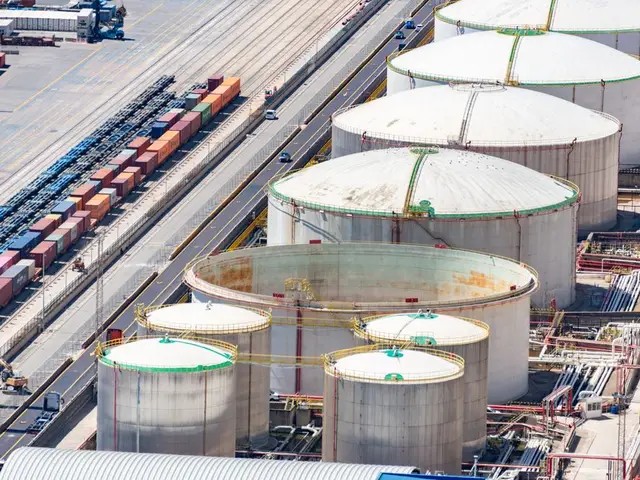
- Singapore (Straits) logistics, plain language
- Documents checked before the Deal Room
- Contacts stay masked until the match
At this hub
How diesel moves through Singapore
Most of the oil storage sits on Jurong Island, a reclaimed industrial island off the south-west coast, and on a ring of smaller offshore islands. Two kinds of site matter for diesel. The first is refineries: ExxonMobil runs a large refining complex here, and the former Shell refinery on Pulau Bukom has belonged since April 2025 to Aster Chemicals and Energy, owned by a Chandra Asri and Glencore joint venture. The second is independent storage that rents tanks to trading companies. Public names include Vopak (with terminals at Banyan on Jurong Island, Sebarok, Sakra and Penjuru), Universal Terminal, Horizon Singapore Terminals, Helios Terminal, Jurong Port Tank Terminals and Tankstore on Pulau Busing. The Jurong Rock Caverns under Banyan Basin hold crude and condensate, not diesel. We have no link to any of these operators. We name them because they are public facts about the hub, and a real seller's papers will point to one of them or to a site just like them.
Singapore is a crossroads rather than a big producer of exportable diesel. Weekly trade data reported by Reuters regularly shows gasoil arriving from refiners in South Korea, China, India and Malaysia, and leaving for Vietnam, New Zealand and Malaysia, with the occasional cargo to South Africa when the numbers work. Traders store, blend and re-export, so the same tank can hold product from several refineries in a single month. That is normal here. It also means a certificate naming one refinery is only as good as the tank history behind it.
Getting product from one terminal to another depends on which two sites are involved. Some Jurong Island terminals are linked by pipeline to neighbouring refineries and tank farms. Jurong Port Tank Terminals, for example, says its pipelines save clients chartering a vessel to move product between its tanks and the refinery and storage next door. Other pairs, especially those on separate islands, need a short shuttle by small tanker or barge. Unlike Fujairah, there is no single port manifold that ties every terminal to every berth, so always ask how a transfer would physically happen.
Seagoing lots follow the regional benchmark. The Platts 10ppm gasoil assessment for Singapore reflects cargoes of 150,000 to 250,000 barrels, about 20,000 to 33,500 metric tons at Platts' own conversion, loading 15 to 30 days ahead within a five-day window. That is medium-range tanker size. Larger tankers carry longer-haul cargoes, and smaller parcels go to island and coastal markets nearby. Inside a terminal, an in-tank sale can be whatever size the two storage clients and the operator agree, which is where most small resale offers come from.
A TTT in Singapore is either an in-tank transfer between two storage clients of the same terminal or a physical move between terminals by pipe or by ship. In both cases the company holding the tank instructs the terminal in writing, the terminal confirms, and an independent inspector measures before and after. If the tank sits in customs-licensed premises, the licensee must also declare the movement through Singapore Customs' TradeNet system, so a real transfer leaves a permit trail. Our guide to TTT vs TTO vs TTV explains how each version is checked.
- Cargo (FOB Straits): MR-size parcels loading 15 to 30 days out; the buyer nominates the ship.
- Pipeline transfers: only between sites that are actually connected; ask which line and which operators.
- Inter-island moves: by small tanker or barge, with its own inspection and paperwork.
- In-tank TTT: title changes in the tank on the holder's written instruction and the terminal's confirmation.
At this hub
Price benchmark (named, not quoted)
In Asia, diesel and gasoil are priced off S&P Global Platts' FOB Singapore gasoil assessments, which Platts calls the main physical reference for gasoil in the region. Platts assesses several sulphur grades (10, 50, 500 and 2,500 ppm) through its Market on Close process, which closes at 16:30 Singapore time. The basis is "FOB Straits", and loading can be nominated at approved terminals in Singapore or across the water in Malaysia. Argus publishes its own Singapore gasoil assessments, which some parties use instead.
Most term contracts and many spot deals are not written as a flat price. They are written as MOPS plus or minus a premium. MOPS stands for Mean of Platts Singapore: the average of a set of future Platts assessments over an agreed pricing period, such as the five days around the bill of lading date or a whole month. Because the final price is only known after the pricing period, a genuine offer states the grade (10ppm, not just "gasoil"), the pricing window and the premium. An offer that quotes a "MOPS discount" without those three details is not a firm offer.
The Platts 10ppm grade is defined by Platts' own specification, with sulphur as the headline figure. Countries across Asia and the Pacific set their own national diesel standards, so a 10ppm cargo out of Singapore may have been made for an Australian, Vietnamese or Philippine buyer rather than to EN 590. Cetane, density, flash point, cold flow and lubricity can all differ. The inspector's certificate tested against the EN 590 limits is what decides whether it is EN590. Our EN590 specification guide lists the main ones.
For context, Enterprise Singapore publishes weekly onshore inventories in three groups: light distillates, middle distillates (where diesel and jet sit) and residues. Reuters and other newswires usually report the figures on Thursdays. They show the direction of the whole hub's stocks, not who owns which tank, so they can never confirm a seller's product. TradeNexusMarket does not publish MOPS levels, premiums or stock figures. Our Platts and Argus benchmarks guide explains how MOPS differs from CIF NWE and FOB Arab Gulf without quoting prices.
At this hub
Incoterms, customs status and documents in Singapore
Seagoing deals are usually FOB Singapore (or FOB Straits, which can include approved Malaysian berths), with the buyer nominating the vessel, or CFR and CIF to the buyer's port when the seller controls the ship. In-tank deals are written ex-tank with a TTT, and their paper trail is the transfer instruction, the terminal's confirmation, a fresh tank storage receipt and the inspector's report rather than a bill of lading. Our Incoterms guide for oil cargoes shows where risk passes under each term, and the TSR guide explains what a storage receipt can and cannot prove.
Customs status is a Singapore-specific check. Singapore Customs licenses premises for petroleum under three headings: oil refineries, licensed warehouses for petroleum (dutiable products held with duty and GST suspended) and bonded warehouses for petroleum (non-dutiable products held with GST suspended). Which one applies depends on the product, and product sold into the local market leaves the scheme and pays whatever is due. For a cargo bound for export, ask which licensed premises hold it and who the licensee is. The terminal, not the seller, is the right source for that answer.
Company checks are straightforward here. Every Singapore company is registered with ACRA, and its business profile (BizFile) can be bought online for a small fee. It shows the registered address, officers and date of incorporation. The name on the storage agreement or terminal confirmation should match the company that signs the SPA. If the seller is a foreign company holding tanks through a Singapore subsidiary, the paper chain should show that link.
Sanctions and origin need care. Singapore applies UN sanctions and, since March 2022, its own export controls and financial measures against designated Russian banks. EU, UK or US rules may still bind you depending on your company, your bank, your insurer and the cargo's destination. Shipping press, including a January 2026 Seatrade Maritime report based on UANI tracking, describes clusters of ship-to-ship transfers outside port limits off the east coast of Peninsular Malaysia involving Iranian, Russian and Venezuelan oil, mostly crude bound for China. Our pages treat Russian-route product as information only. Ask for the certificate of origin and load-port quality papers early, and take your own legal and compliance advice before signing.
Independent inspectors with a long public presence in Singapore, among them SGS, Intertek, Bureau Veritas, Saybolt and AmSpec, carry out most quantity and quality work at the terminals. Name a buyer-nominated or joint inspector in the SPA, and confirm any report with the issuing office using our SGS and Intertek verification guide. The usual order of documents is in our deal-process guide, how payment should be protected is in our escrow and verification guide, and why money should never move on a dip test alone is in our MT103 guide. To compare hubs, see EN590 at Rotterdam and EN590 at Fujairah, and for jet fuel, Jet A-1 at Rotterdam and Jet A-1 at Singapore.
- FOB Singapore or FOB Straits for cargoes; ex-tank with a TTT for in-tank deals.
- Which customs-licensed premises hold the product, and who the licensee is, confirmed by the terminal.
- ACRA BizFile profile that matches the SPA, the storage agreement and the bank details.
- Certificate of origin and load-port quality papers before any sanctions decision.
- Terminal confirmation checked through contacts you find yourself. The seller checklist has the steps, and the Deal Room rules show what we check before an introduction.
Singapore-specific red flags
- "EN590 in Jurong" with no terminal name, no tank number and no storage-client company you can verify with the terminal itself.
- Bunker paperwork in a bulk diesel sale. MPA's mass flow meter readings and electronic bunker delivery notes belong to marine fuel deliveries to ships, not to cargo or in-tank sales of road diesel.
- A "MOPS minus" price with no sulphur grade, no pricing window and no stated premium, or a discount far below what your own market data shows.
- A seller who calls the product "bonded" or "licensed warehouse" but cannot name the premises or the licensee, or who asks you to pay a "customs release" or "permit" fee to them.
- Product on a ship anchored outside port limits, off Johor or further up the Malaysian coast, offered as if it were in a Singapore tank.
- A Singapore company whose ACRA profile shows a different name, a very recent incorporation or officers who don't match the people you are dealing with.
- Requests for tank rental, injection or dip-test charges paid to the seller before your inspector can reach the tank. It is the familiar "MT103 after dip test" pattern in a Singapore setting.
FAQ
EN590 at Singapore
Is 10ppm gasoil in Singapore the same as EN590?
Not necessarily. The Platts Singapore 10ppm grade is set mainly by sulphur, and cargoes leaving Singapore are often made to another country's national diesel standard. EN590 means the product meets every limit in the European EN 590 standard. Ask for an inspector's certificate tested against EN 590, not just a sulphur result.
What does MOPS mean in a diesel offer?
MOPS is the Mean of Platts Singapore, an average of future Platts assessments over an agreed pricing period. Deals priced "MOPS plus" or "MOPS minus" a premium only become a final number once that period ends. A real offer names the grade, the pricing window and the premium.
What is the difference between FOB Singapore and FOB Straits?
FOB Straits is the basis Platts uses for its Singapore assessments, and it allows loading at approved terminals in both Singapore and Malaysia. If your SPA says FOB Straits, the seller may load you at a Malaysian berth across the strait, so name the acceptable terminals in the contract if that matters to you.
How do I check a Singapore tank offer?
Get the terminal name, tank number, storage-client company and a recent TSR or terminal confirmation. Contact the terminal using details from its own website, check the seller's ACRA profile, and nominate your own inspector before any money moves. If the seller refuses any of these steps, walk away.
Can I post an EN590 requirement for Singapore on TradeNexusMarket?
Yes, and posting is free. State whether you want FOB Singapore, an in-tank TTT or CFR to your port, plus the grade, quantity and loading window. Our team matches on product, spec, quantity, port, Incoterm and timing, and checks both companies' documents before a Deal Room opens. We do not quote MOPS or hold stock.
Guides
Read before you trade at this hub
- Guide · Deal structuresTTT vs TTO vs TTV: how diesel actually changes hands at a terminal
- Guide · Deal documentsWhat a TSR (tank storage receipt) is, and how to check one
- Guide · Deal documentsATV, ATS and DTA: what these storage documents mean, and who can really issue them
- Guide · Deal documentsHow to verify an SGS or Intertek report with the issuer
- Guide · Red flagsWhy "MT103 after dip test" is a warning sign in fuel offers
- Guide · EN590How to check whether an EN590 seller is real: a 10-point checklist
- Guide · Crude oilLOI, ICPO, SPA, POP: the crude oil deal process in plain English
- Guide · Deal documentsIncoterms 2020 for oil cargoes: FOB, CIF, CFR and DAP explained
- Guide · Payment and trustHow escrow, payment instruments and verification protect energy buyers
- Guide · EN590The EN590 10ppm specification explained, line by line
Post EN590 for Singapore
Open a free account and post what you need or what you supply at Singapore (Straits). Our team looks for the other side and checks both companies before the Deal Room opens. See what members have posted on the public board.